You closed up, drove home, and finally fell asleep.
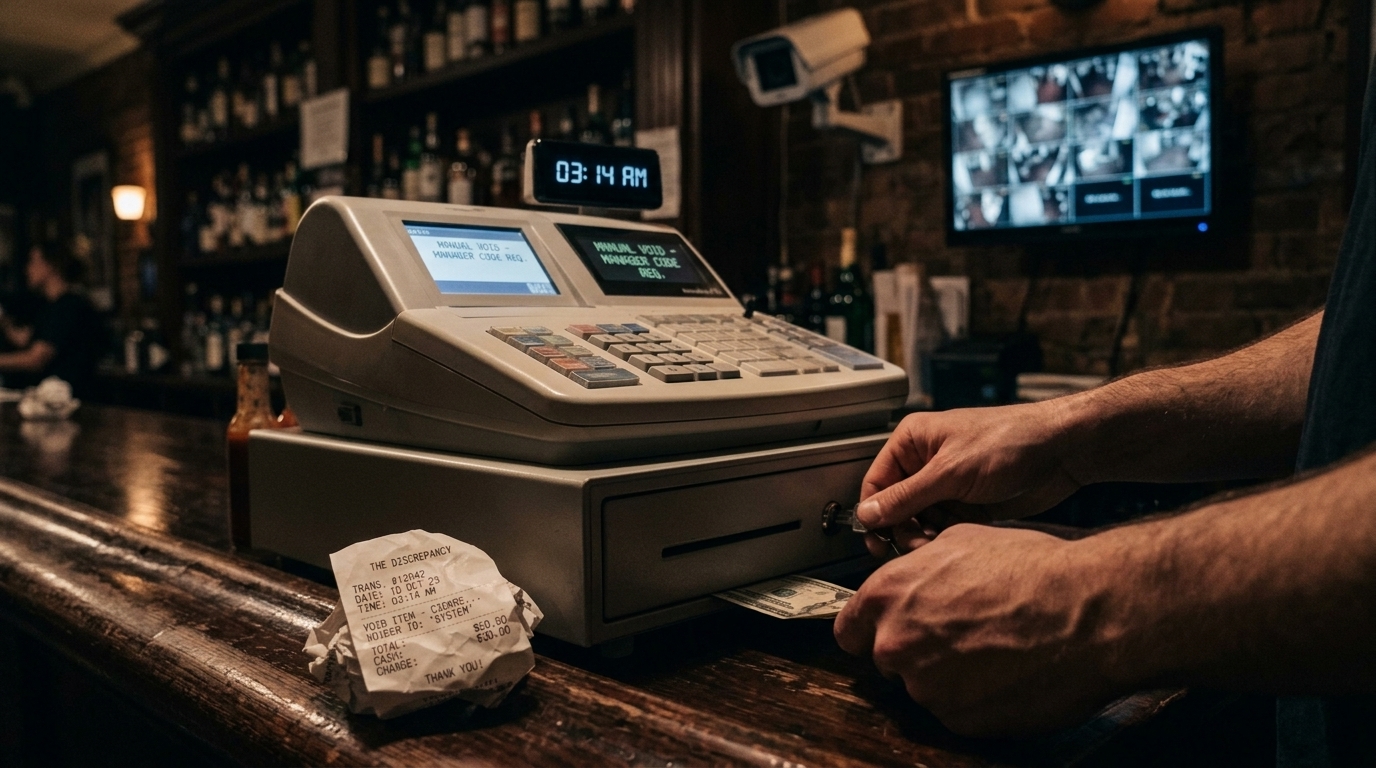
And somewhere around 3 AM — while you're dead to the world — your cashier opens the register after a cancelled transaction. They pocket $40. Close the drawer. And smile at the next customer like nothing happened.
You won't know about it until Friday, when the numbers don't add up. Maybe you'll never know.
That's the thing about retail theft that nobody warns you about when you open your first store. It's not the masked robber kicking in the door. It's the quiet, calculated stuff — the cancelled sales, the ghost coupons, the safe drops that never quite match the POS record. The kind of theft that happens calmly, confidently, because whoever's doing it knows that no one is really watching.
The question is: are you watching? And more honestly — can you be?
The Myth of "I Have Cameras
Most business owners we talk to have cameras. Good ones, even. HD footage, wide-angle lenses, cloud backup. They've invested real money into hardware.
But here's what those cameras are actually doing at 3 AM: recording. That's it. They're not flagging anything. They're not alerting anyone. They're just storing footage that you'll review after something already went wrong — if you review it at all.
There's a meaningful difference between having cameras and being protected. One is passive. The other requires someone — or something — to be actively paying attention, all the time.
Most retailers don't have that. And the people working your registers at 2 AM? They know it.

What Actually Happens When No One Is Watching
Let's be specific, because the vague idea of "theft" undersells the problem.
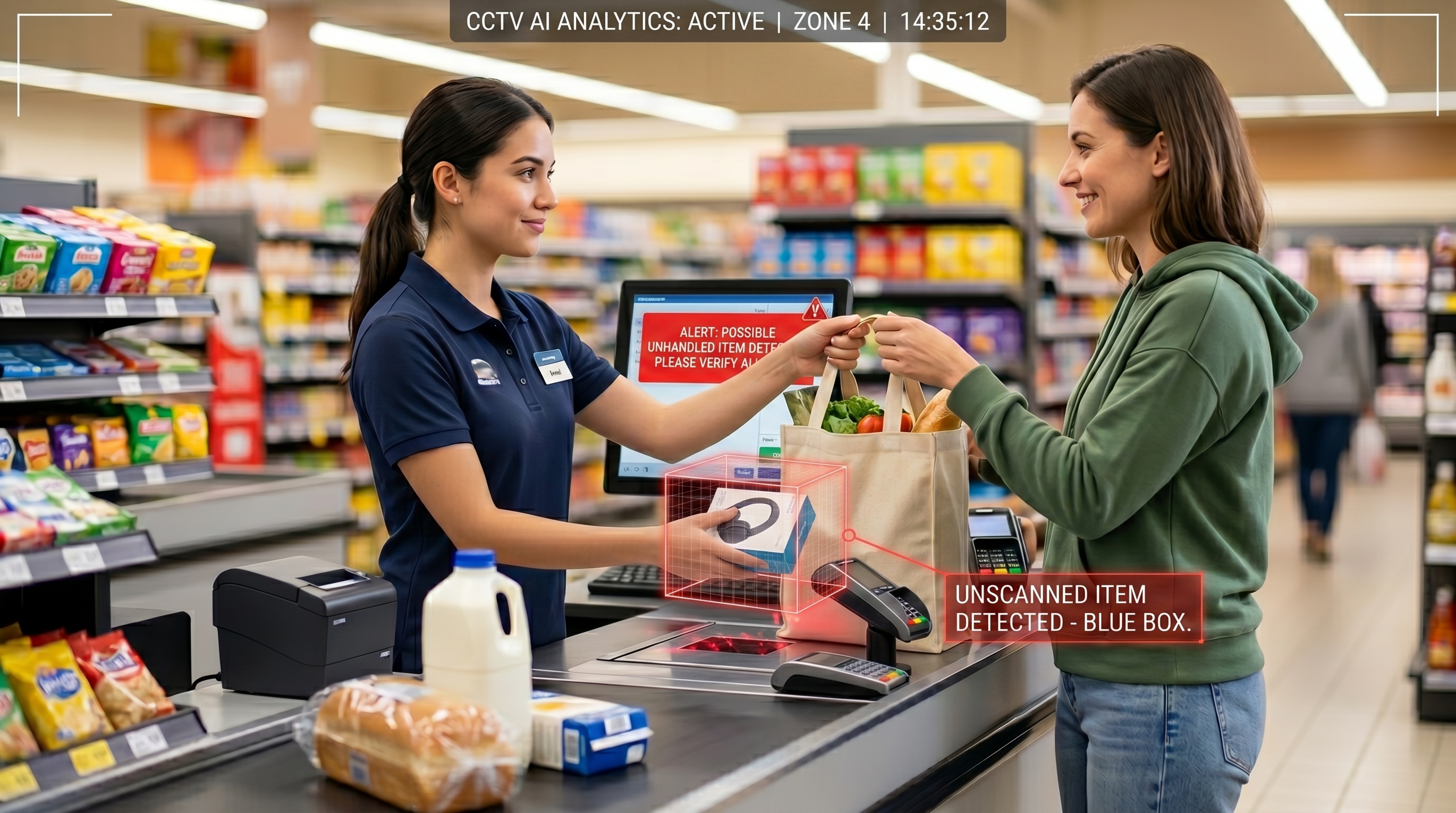
Aborted transactions are one of the most common internal theft methods in retail and fuel station environments. An employee rings up a sale, the customer pays cash, and then the employee voids or cancels the transaction in the POS system. The cash goes in the drawer. Then it comes out of the drawer — into a pocket. The system shows a cancelled sale. Nothing looks wrong unless someone is cross-referencing the POS timestamp against what the camera actually captured.
Then there's the coupon scam — employees running micro-coupon codes that reduce a transaction to under $0.25, effectively zeroing out a sale while pocketing the cash. It's a practiced trick. And it's nearly invisible unless your system is specifically built to catch it.
Safe drops are another gap. Your policy says cash gets dropped in the safe every two hours. But is it? And does the amount dropped match what the register recorded? Without verification, you're trusting the honor system — in an environment where the honor system costs U.S. retailers an estimated $47.8 billion a year in shrink losses.
These aren't hypotheticals. They're the everyday mechanics of internal theft in retail operations. And they happen most often during the shifts when owners aren't present — evenings, overnight, weekends.
The Real Cost Isn't Just the Cash
Here's what gets missed in most loss prevention conversations: the money is only part of it.
The other cost is your attention. Your sleep. The mental weight of knowing something might be happening and not being able to do anything about it from your couch at midnight.
Operators who run multiple locations — gas stations, convenience stores, hotel front desks — carry an exhausting amount of ambient anxiety. You built something. You're responsible for it. And you can't be everywhere at once.
That's the burden nobody talks about. The checking-your-phone-at-11pm burden. The "let me just pull up the cameras real quick" burden that turns into 45 minutes of footage review and still no clear answers.
You shouldn't have to live like that. And with the right system, you don't.
What "Someone Is Actually Watching" Looks Like
AI Surveillance was built by people who ran gas stations and retail operations for decades. Not by software engineers who read a whitepaper about loss prevention — by operators who got tired of being stolen from and couldn't find a system that actually solved it.
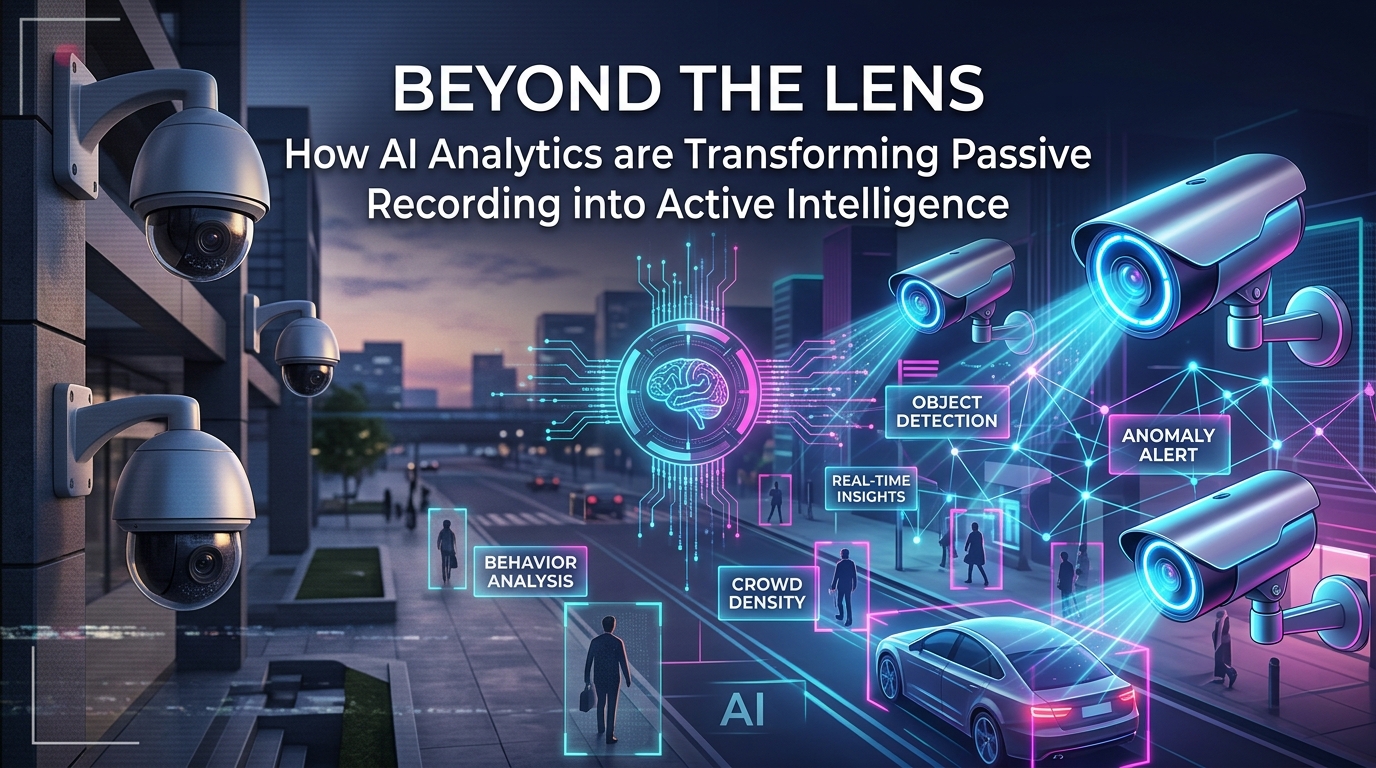
The approach is different from most surveillance products in one key way: the AI catches the event, and a real human verifies the threat.
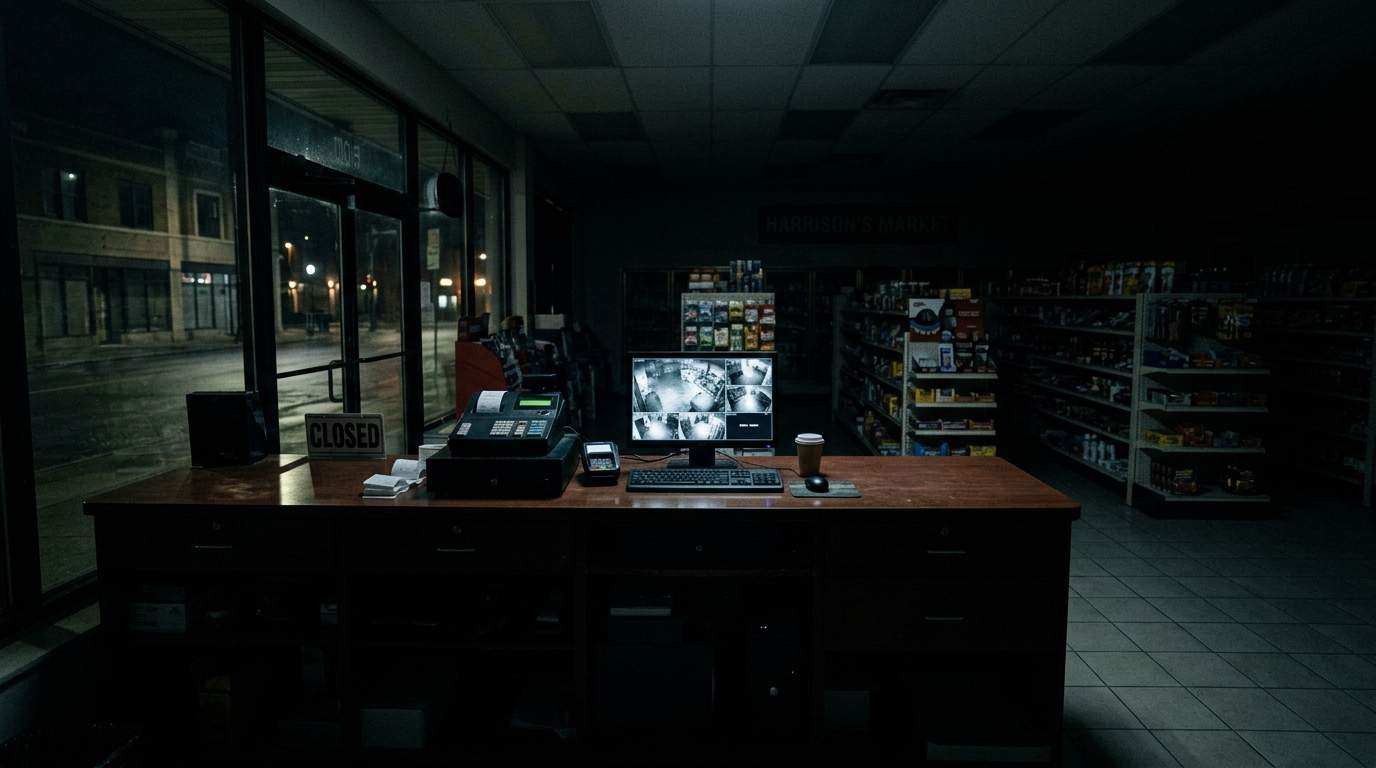
When the system flags an aborted transaction, a trained monitoring team member reviews it in real time. When a drawer opens after a cancelled sale, someone is watching to see where the cash goes. When a loiterer is picked up near your perimeter at 2 AM, a team member can speak directly through your two-way audio system — not a canned recording, an actual person — and tell them to move along before anything escalates.
That's not software. That's a team watching your back while you sleep.
The 3 AM Difference
Picture two versions of tonight.
In the first version, something happens at your store at 3 AM. You find out tomorrow — or next week, when you reconcile the books. By then the moment is gone, the cash is gone, and the best you can do is review footage and hope there's enough to act on.
In the second version, something happens at 3 AM. Our system flags it. A team member verifies it in real time. If it's a register issue, it's logged and documented with POS-linked video evidence. If it's a physical threat, our team intervenes immediately — and contacts local authorities if needed. You get a report in the morning.
You slept through both scenarios. But in one of them, you were protected.
Who This Is For
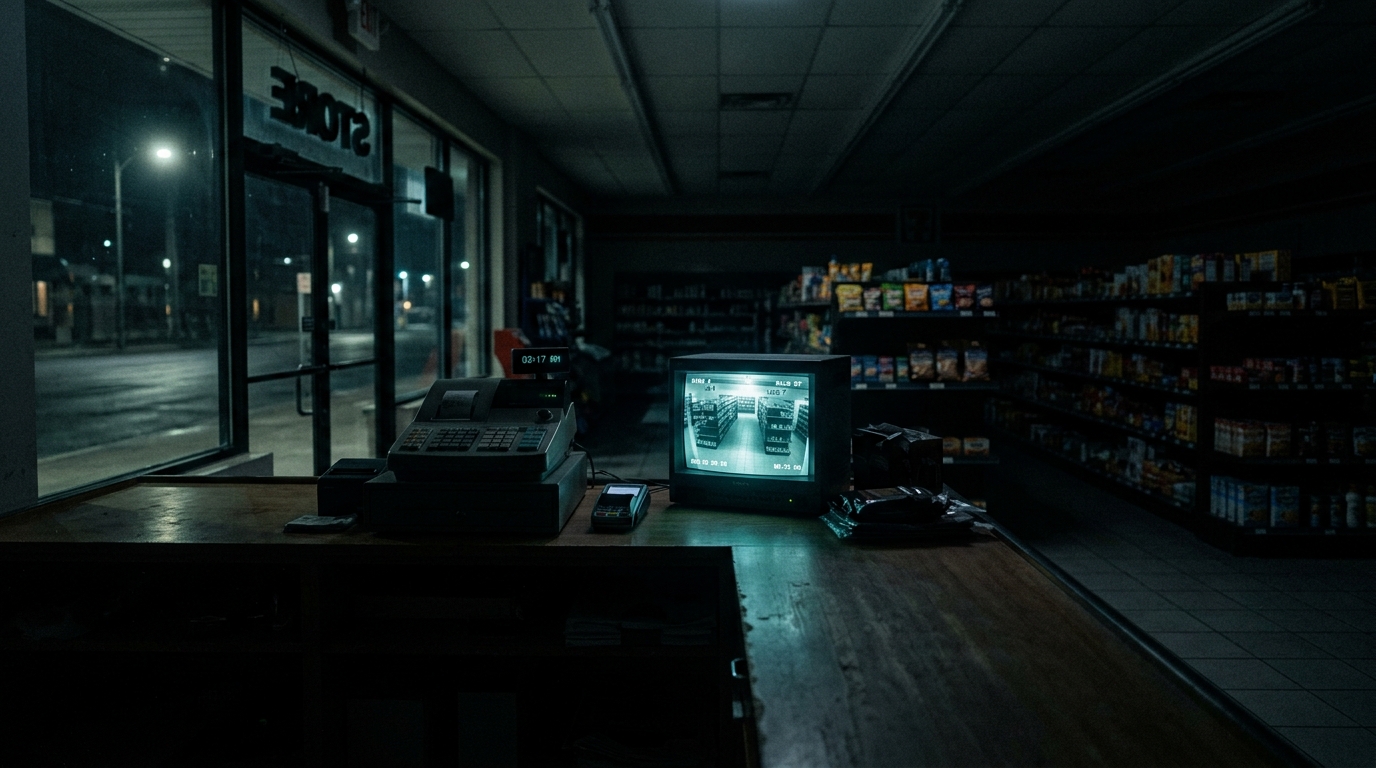
If you run a single fuel station, a small chain of convenience stores, a hotel front desk, or any retail operation with overnight staff — this is the gap in your security setup. Not the cameras. The cameras are probably fine. The gap is the active, intelligent monitoring layer that turns footage into real-time protection.
Operators with multiple locations feel this even more acutely. You can't physically be at Location 3 while you're handling something at Location 1. A centralized monitoring team can be at all of them, simultaneously, all night.
And the economics make sense. The cost of a monitoring plan is a fraction of what a single month of undetected internal theft costs the average multi-location operator. We've seen clients recover hundreds of thousands of dollars in protected revenue — not by catching one big incident, but by closing the small daily leaks that had been bleeding them for years.
What the First Step Looks Like
You don't need to replace your cameras. Most modern systems — including ours — are hardware-agnostic. We integrate with what you already have, add the intelligence layer on top, and your existing infrastructure becomes the foundation of a real monitoring operation.
The setup is fast. The difference is immediate.
If you're reading this at 11 PM after a long day and the thought "I wonder what's happening at the store right now" crossed your mind — that's the answer. That feeling is exactly the burden we take off you.
Stop wondering. Start sleeping. Request a free demo →
Frequently Asked Questions
What is 24/7 retail surveillance monitoring?
24/7 retail surveillance monitoring means a dedicated team — supported by AI detection — actively watches your store cameras around the clock, flagging and verifying suspicious events in real time rather than just recording footage for later review.
How is AI Surveillance different from a standard security camera system?
Standard cameras record. AI Surveillance monitors. Our system uses AI to detect specific threat patterns — aborted transactions, after-hours movement, perimeter breaches — and a human team verifies every alert in real time. You get protection, not just footage.
Can AI Surveillance integrate with my existing cameras?
Yes. Our system is hardware-agnostic and designed to work with most modern IP cameras without requiring a full hardware replacement.
What happens when the system detects something suspicious?
Our monitoring team reviews the event immediately. Depending on severity, they'll document it with POS-linked video evidence, use two-way audio to intervene directly, or contact local authorities. You receive a full incident report.
Is 24/7 monitoring worth the cost for a single-location operator?
For most single-location operators — especially fuel stations and convenience stores — the cost of monitoring is recovered within the first month of closing internal theft leaks. Aborted transactions, coupon scams, and safe drop discrepancies alone typically cost operators far more than a monitoring plan.
How quickly can AI Surveillance be set up at my location?
Most integrations are completed within a week with no new wiring required.