For a customer-facing business, a spilled drink in an aisle or a wet floor in a lobby is more than just a maintenance issue—it is a massive financial liability.
According to the latest industry safety indexes, "falls on the same level" cost U.S. employers a staggering $10.5 billion annually. The average slip-and-fall settlement ranges from $30,000 to $50,000 for minor injuries, and high-severity incidents regularly reach six or seven figures. But the direct settlement is only the tip of the iceberg; indirect costs like legal fees, insurance premium hikes (often 25% to 50%), and operational disruptions can multiply the total expense by up to five times.
Worse still, a significant portion of these claims are exaggerated or entirely fraudulent. If you are relying on traditional CCTV to protect your business against these multi-thousand-dollar lawsuits, you are fighting a losing battle. Here is why premises liability fraud is rising, and how AI Surveillance (www.aisurveillance.ae), based in Renton, WA, is equipping businesses with the active intelligence needed to fight back.
The "Evidence Gap" of Traditional CCTV
Fraudsters know how the system works. Often, a business will not receive official notice of a slip-and-fall claim until weeks, months, or sometimes a year after the alleged incident.
By the time the claim arrives on the manager's desk, the staff has turned over, memories have faded, and most importantly, the CCTV footage has been automatically overwritten. This creates an "evidence gap." Without video proof, businesses and their insurers are forced to rely on incomplete information, making it nearly impossible to dispute an exaggerated claim.
The Anatomy of a Staged Fall
Professional fraudsters and opportunistic individuals frequently exploit blind spots and traditional security systems. Some common tactics include:
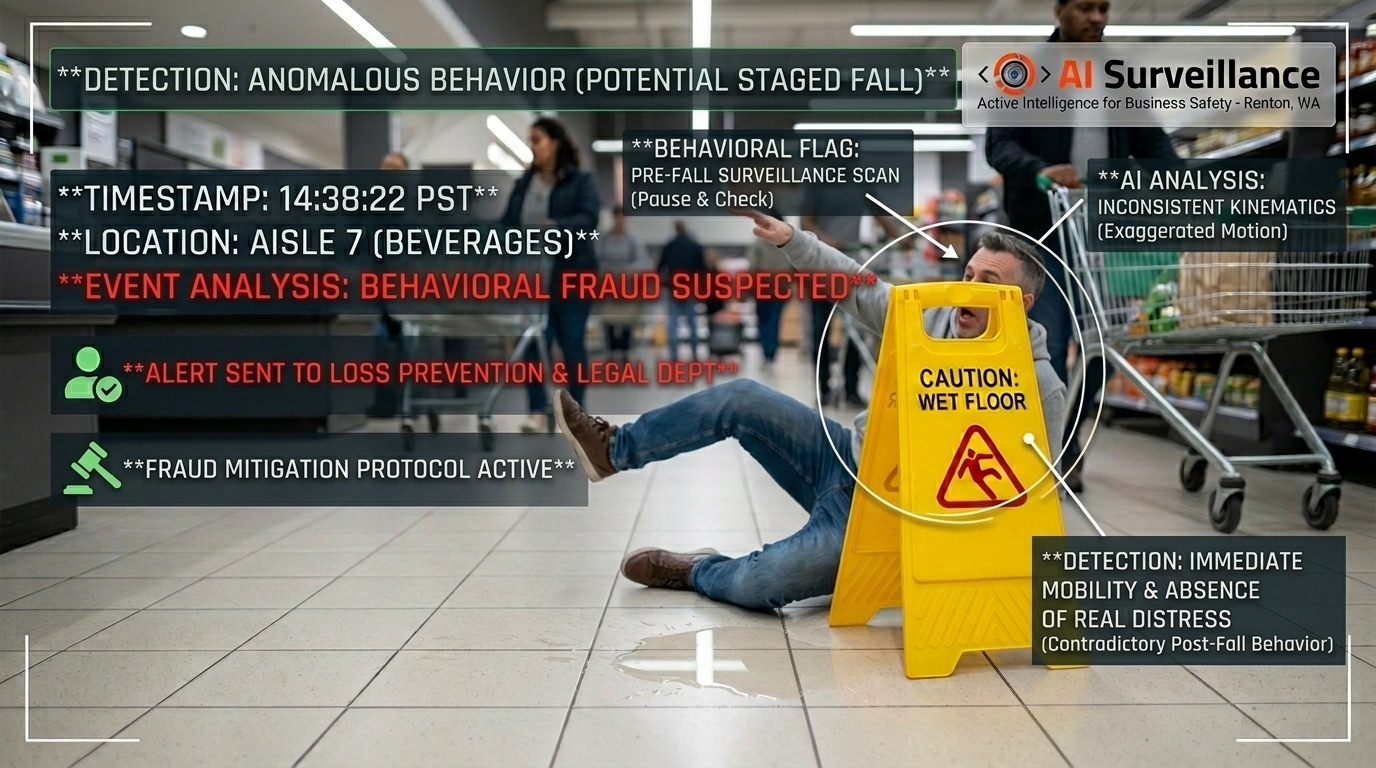
- The Exaggerated Pause: A fraudster will spot a minor hazard (like a dropped piece of fruit), pause to look at it, check to see if anyone is watching, and then intentionally "slip" over the item.
- The Phantom Injury: A customer may take a genuine, minor stumble that requires no assistance, but months later file a claim citing severe, ongoing bodily injury that contradicts their immediate post-fall behavior.
Without timestamped, behavioral evidence leading up to the incident, the business is usually found liable.
How AI Surveillance Stops Liability Fraud
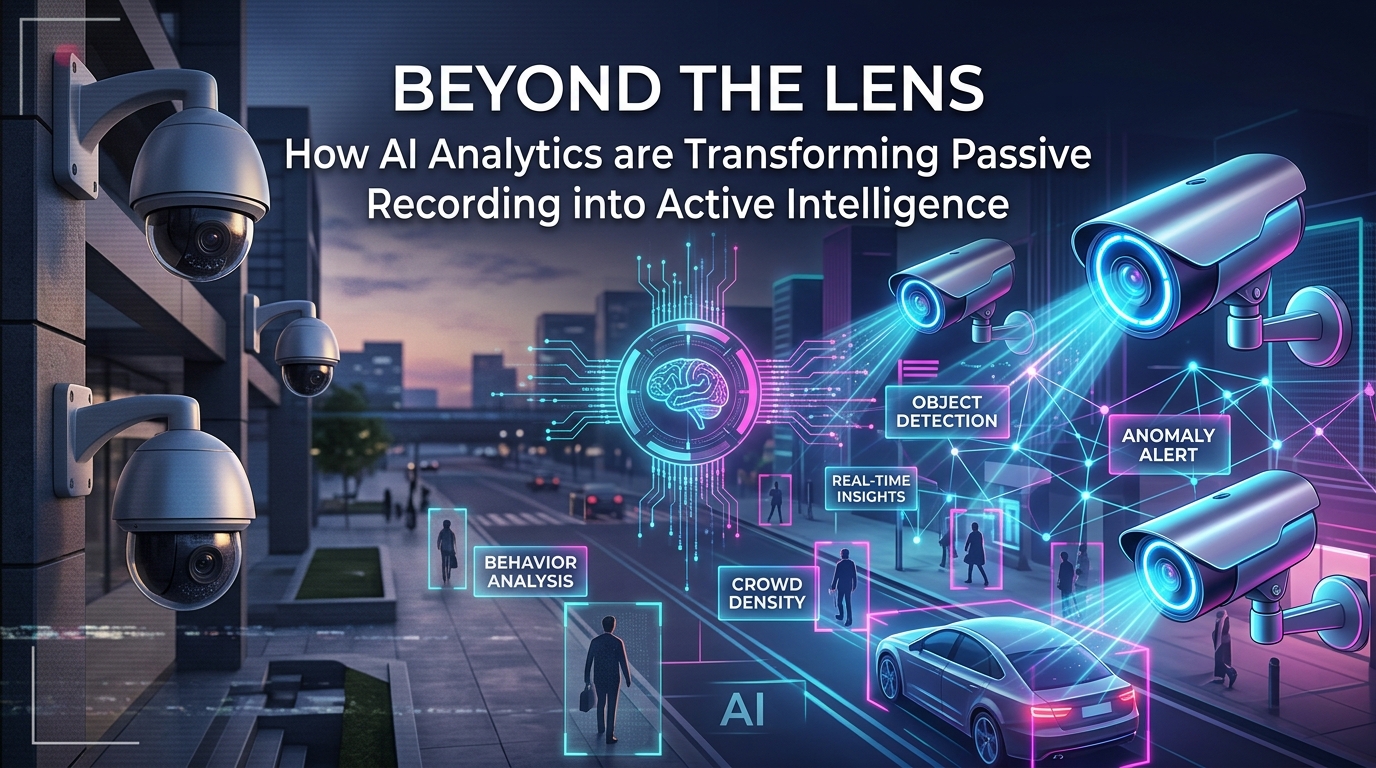
At AI Surveillance, our Renton-based engineering team builds proactive, edge-computing security systems designed to protect your bottom line. We move beyond simple recording to offer true risk management.
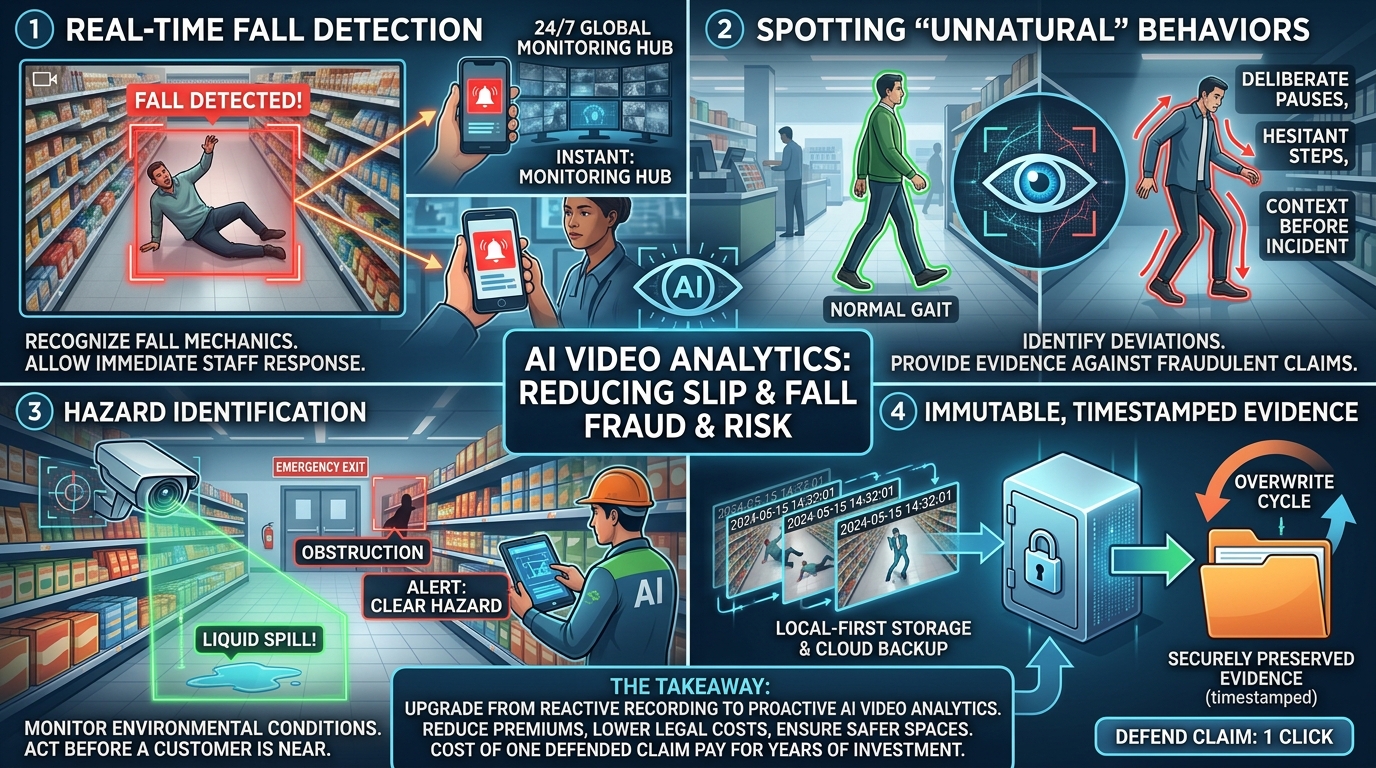
1. Real-Time Fall Detection
Our AI models do not wait for a manager to review the tape. Using advanced behavioral analysis, the cameras recognize the physical mechanics of a fall in real-time. If a person drops to the floor, an instant alert is sent to on-site management and our 24/7 global monitoring hub, allowing staff to respond immediately and document the scene accurately before evidence is altered.
2. Spotting "Unnatural" Behaviors
AI computer vision is trained to recognize deviations from normal walking patterns. It can identify the deliberate pauses, hesitant steps, or exaggerated movements that typically precede a staged fall. By capturing the context before the incident, businesses can provide their legal teams and insurers with irrefutable evidence that a claim is fraudulent.
3. Hazard Identification
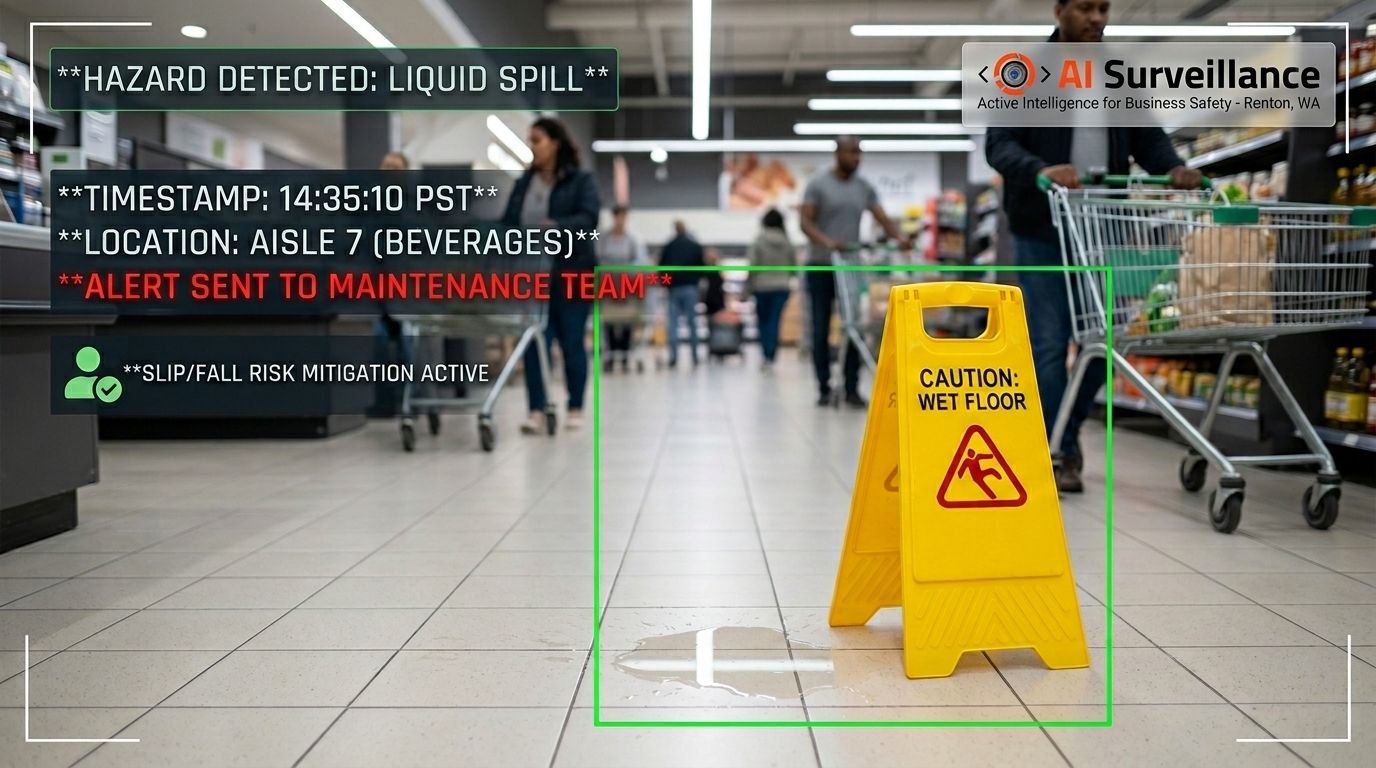
Preventing the fall is always cheaper than fighting the claim. Our systems can be trained to monitor environmental conditions, such as spotting liquid spills in high-traffic aisles or detecting obstructions near emergency exits, alerting maintenance staff to clear the hazard before a customer ever steps foot near it.
4. Immutable, Timestamped Evidence
Because our architecture utilizes a local-first storage model coupled with critical cloud-based alert backups, the "evidence gap" is eliminated. When an incident is flagged by the AI, that specific, timestamped video clip is securely preserved and isolated from the standard overwrite cycle. When a lawsuit arrives six months later, your defense is just a click away.
The Takeaway: Slip and fall fraud is not an inevitable cost of doing business. The cost of a single successfully defended claim can pay for years of AI technology investment. By upgrading from reactive recording to proactive AI video analytics, businesses can drastically reduce their insurance premiums, lower legal costs, and ensure their spaces are safer for everyone.
Questions & Answers (Q&A)
Q: How does AI know the difference between someone falling and someone bending over?
A: Modern AI video analytics use complex deep learning models trained on millions of behavioral data points. The system evaluates the speed, trajectory, and skeletal positioning of the person. It can easily differentiate between a customer bending down to tie their shoe and someone experiencing a sudden loss of balance.
Q: Will installing AI cameras automatically lower my insurance premiums?
A: While policies vary by provider, many commercial insurance companies offer premium discounts to businesses that implement proactive risk management and advanced loss-prevention technologies. Demonstrating that you have real-time hazard detection and robust evidence preservation often strengthens your negotiating position during policy renewals.
Q: Can AI Surveillance detect spills on the floor?
A: Yes. Specialized AI cameras can detect the glare and contrast changes caused by liquid spills on hard surfaces. This allows the system to alert staff to a hazard instantly, proving that your business takes proactive, reasonable steps to maintain a safe environment—a critical defense against negligence claims.
Q: Do I need to replace all my existing cameras to get fall detection?
A: Not necessarily. AI Surveillance offers bridge devices and AI edge hubs that can integrate with many existing IP camera networks, turning your current "dumb" cameras into smart, analytical tools without a massive hardware overhaul.