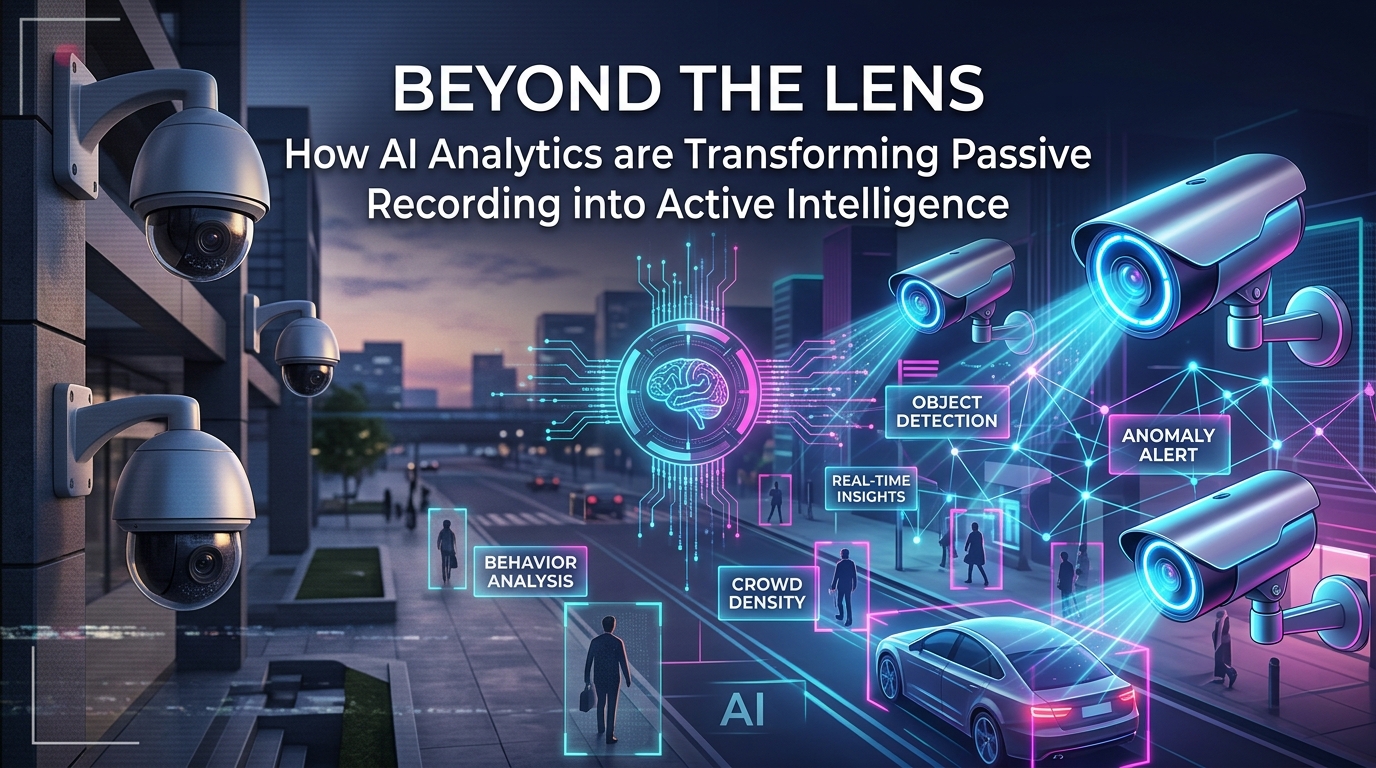
We have all been there: You are trying to scan a barcode, the machine beeps loudly, an error message pops up, and you hear the dreaded phrase, “Please wait for assistance.”
Self-checkout was initially sold to consumers as the ultimate convenience and to retailers as a revolutionary labor-saving technology. But fast forward to today, and the self-checkout lane has morphed into one of the biggest financial headaches in the retail sector. Last year alone, self-checkout theft hit a staggering $17 billion in the U.S., driving overall retail "shrinkage" to unprecedented levels. Stores with self-checkouts are seeing shrink rates of up to 4%—nearly 16 times higher than traditional cashier lanes.
This is exactly why aisurveillance.ae was built. We didn't just design software; we created a proactive shield for retailers, gas stations, and supermarkets who are tired of paying the "shrinkage tax." Here is how the $17 billion self-checkout crisis happened, and how our AI-powered ecosystem is stopping it in its tracks.
The Anatomy of Self-Checkout Theft
When you replace trained human cashiers with a touch screen, you open the door to a wide spectrum of theft—ranging from genuine accidents to organized criminal strategies. Studies show that retail theft is now five times more likely at a self-checkout kiosk than at a manned register.
Here are the most common ways shrinkage occurs in the self-service lane:
- The "Oops" Non-Scan: About 21% of self-checkout users admit to accidentally walking out with an unscanned item. The machine glitches, the customer gets frustrated, and the item ends up in the bag anyway.
- The "Banana Trick": This is a deliberate tactic where a shopper places an expensive item (like premium steak or organic cosmetics) on the scale but types in the code for a much cheaper item, like bananas. Surprisingly, 15% of self-checkout thieves admit to using this exact method.
- "The Slip": About 22% of shoppers use a technique where they hold two items together, but only the bottom item’s barcode actually crosses the scanner.
Shockingly, a recent survey revealed that over 33% of consumers admit to stealing at least once at a self-checkout kiosk. Many view it as a "victimless crime" or feel entitled to a free item for doing the work of a cashier.
The Retail Resistance: Scaling Back
Retailers are finally waking up to the reality that relying on the "honor system" is a very expensive business model. In response to the $17 billion bleed, major brands are pulling the plug or scaling back. Target has implemented strict 10-item limits, Dollar General has removed kiosks from thousands of locations, and Walmart is heavily auditing stores with the highest theft rates.
However, abandoning the technology entirely isn't the answer. Shoppers still want the speed of self-checkout, and retailers still need the operational efficiency. The solution is making the machines smarter.
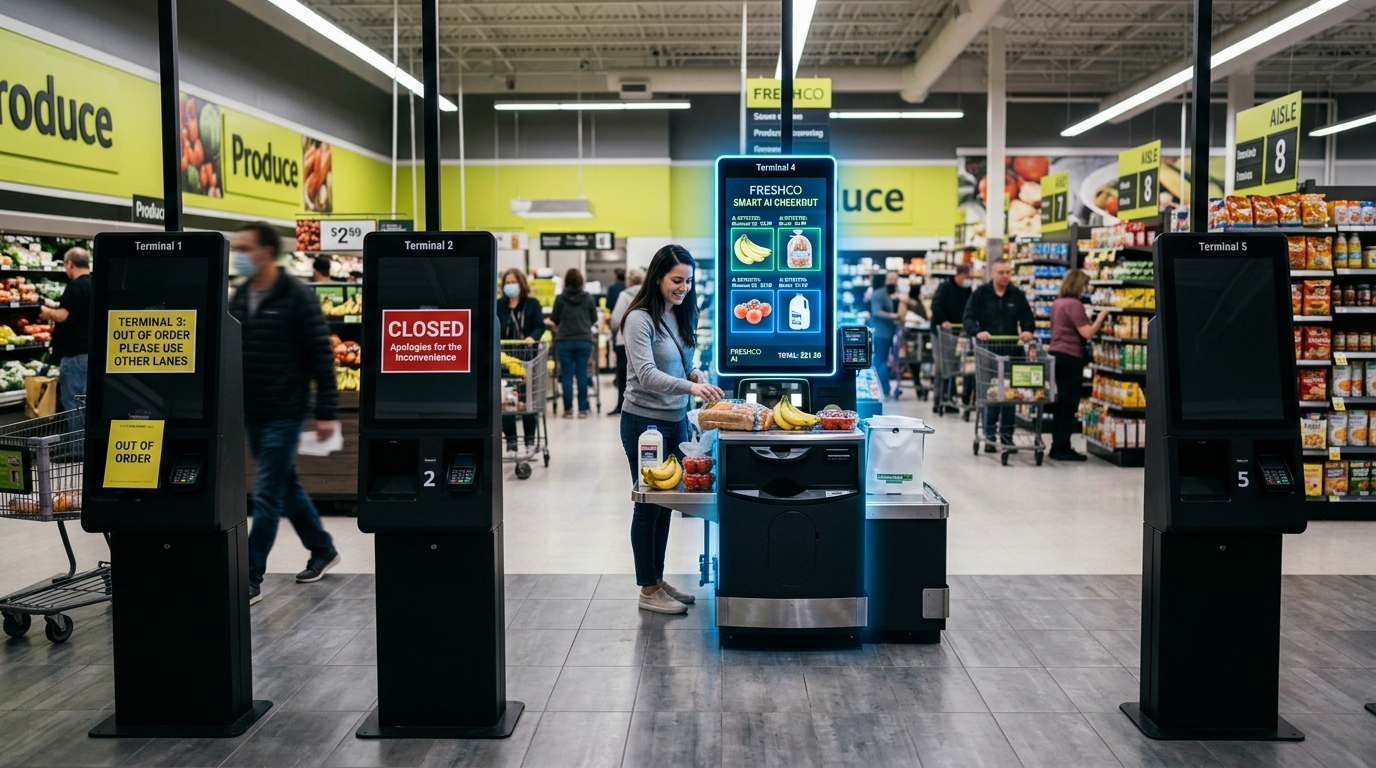
How AI Surveillance Fixes the Glitch
Traditional CCTV cameras are just expensive paperweights—they record theft so you can watch your margins walk out the door the next day. aisurveillance.ae was built by retail operators who know that recording a crime doesn't save your inventory. Preventing it does.
Here is how our platform actively protects your self-checkout lanes and overall operations:
1. Computer Vision and "Sweethearting" Prevention
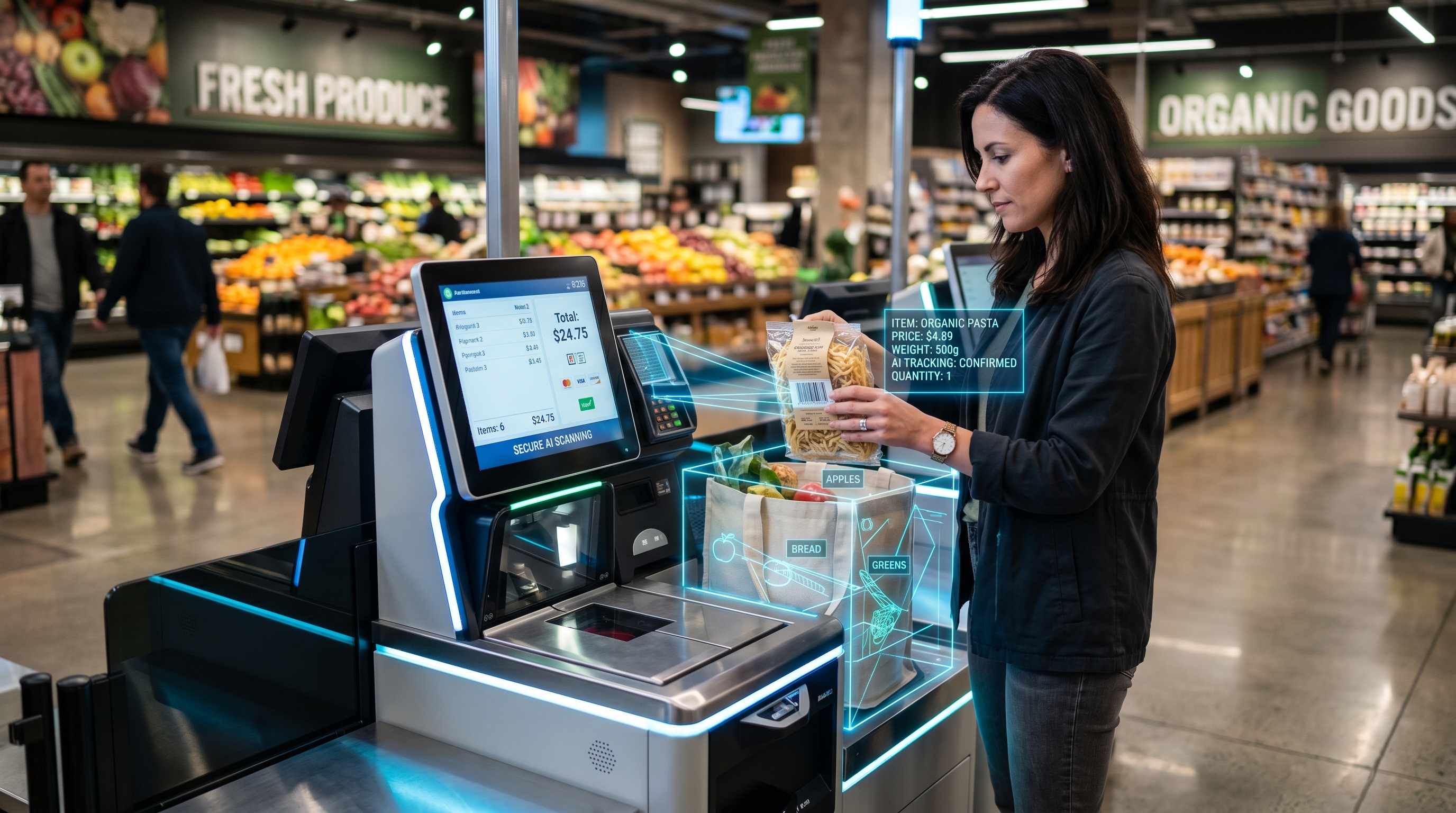
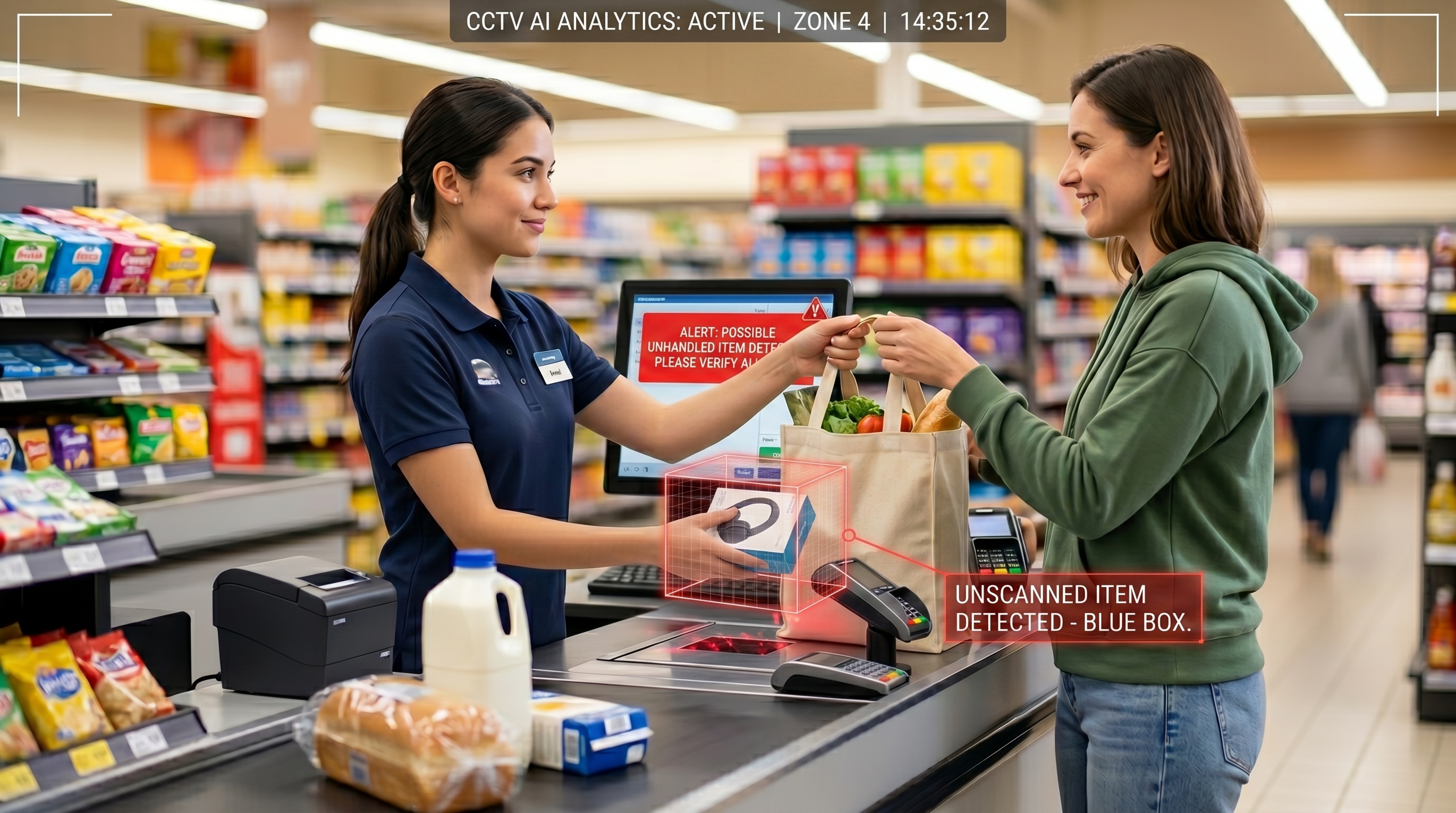
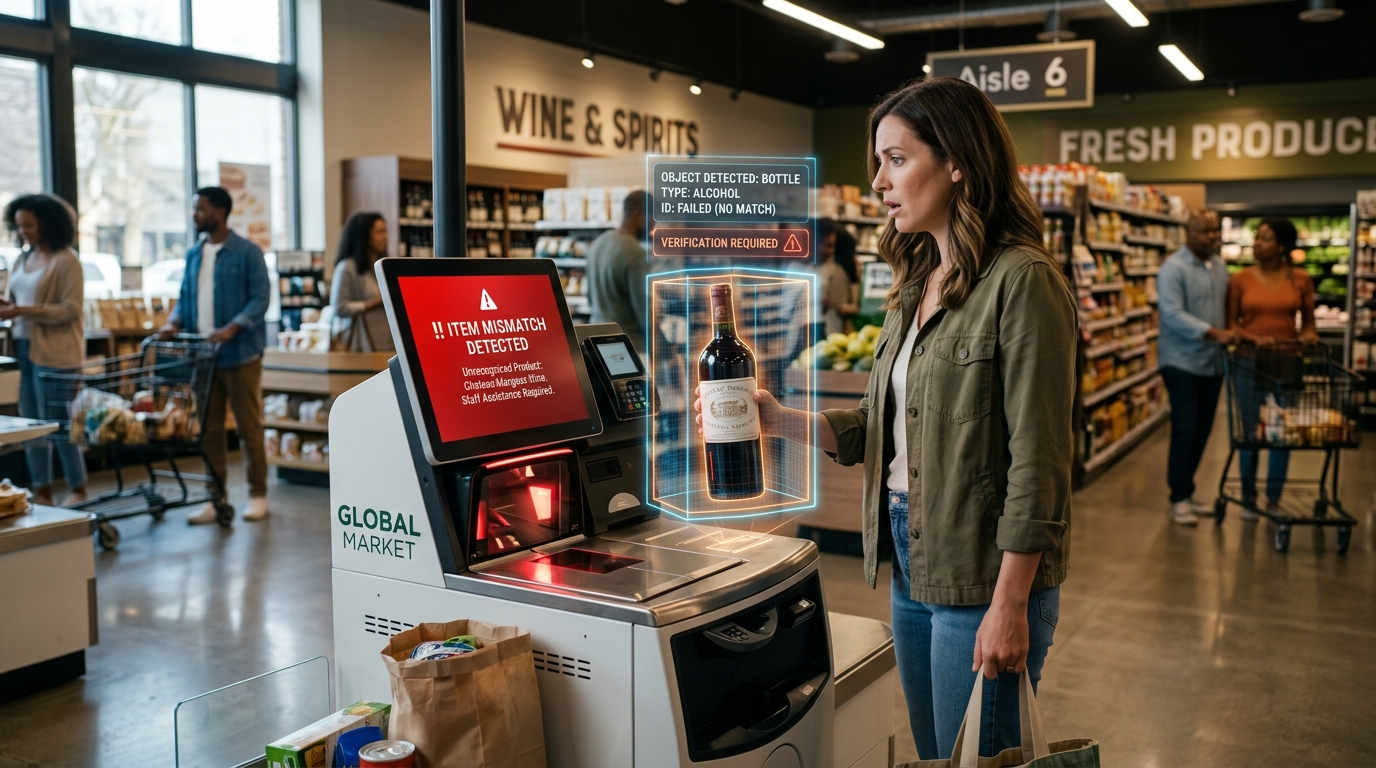
Our AI integrates directly with your self-checkout kiosks and traditional Point of Sale (POS) systems. By using advanced computer vision, the camera watches the scanning process in real-time. If the AI sees a customer place a $50 bottle of wine in the bagging area, but the POS registers a $1 apple (the "Banana Trick"), the system instantly flags the mismatch and alerts a staff member to intervene before the payment is finalized.
2. Forensic POS Audits
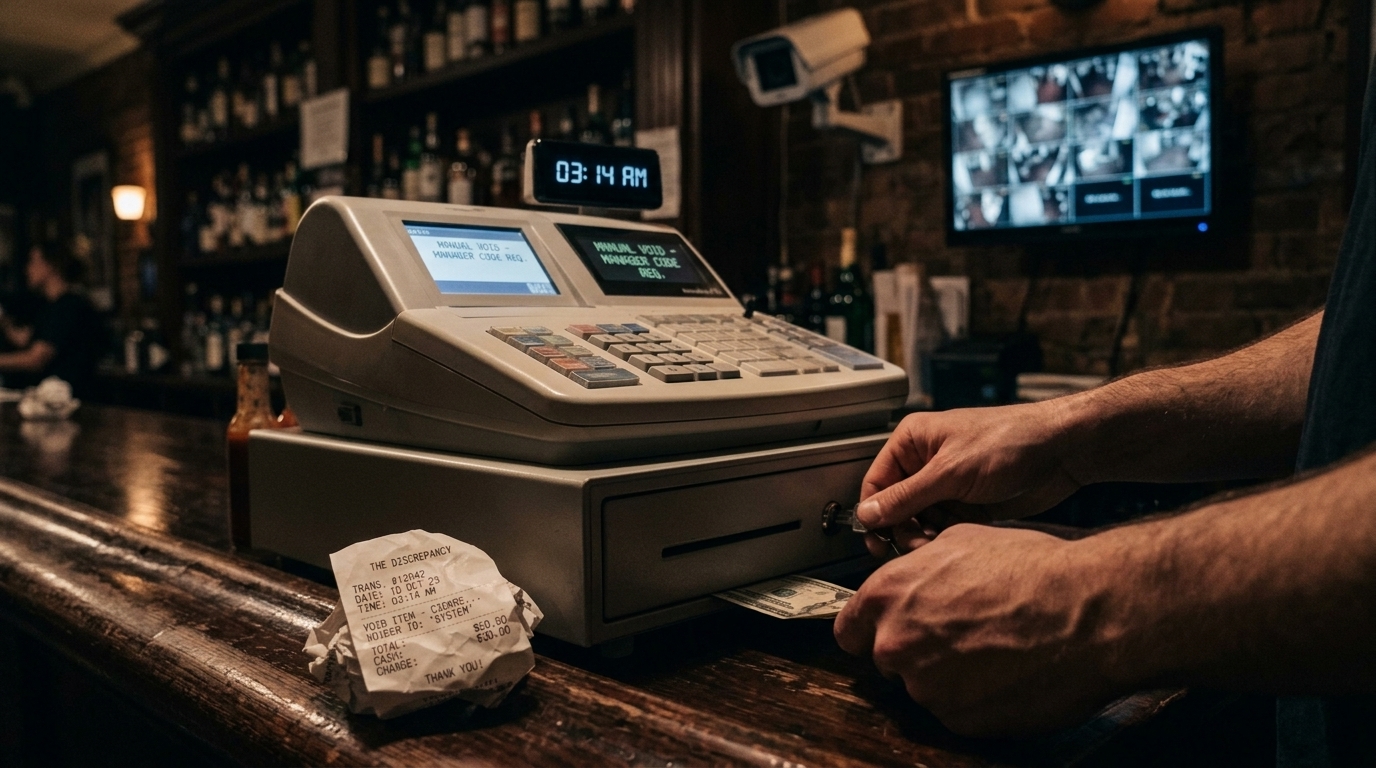
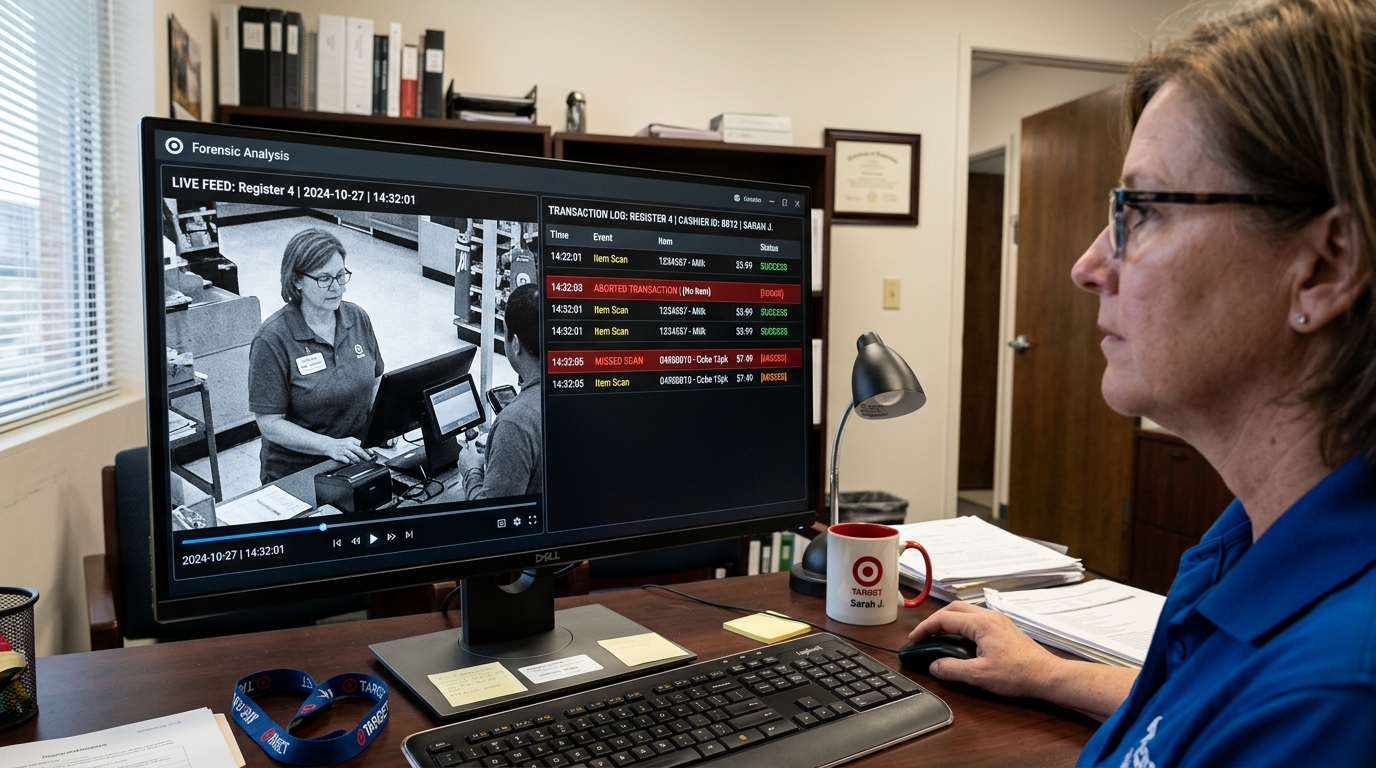
Internal "shrink" and employee errors are often just as costly as customer theft. AI Surveillance acts as your ultimate "Efficiency Expert" by cross-referencing POS data directly with video feeds.
- Aborted Transactions: Every canceled sale or void is flagged and attached to a video clip, so you can see if the customer was actually present or if a clerk pocketed the cash.
- Missed Scans: The system detects when an item passes over the scanner without successfully registering a beep, capturing the "slip" technique instantly.
3. Human-in-the-Loop Monitoring & Active Audio
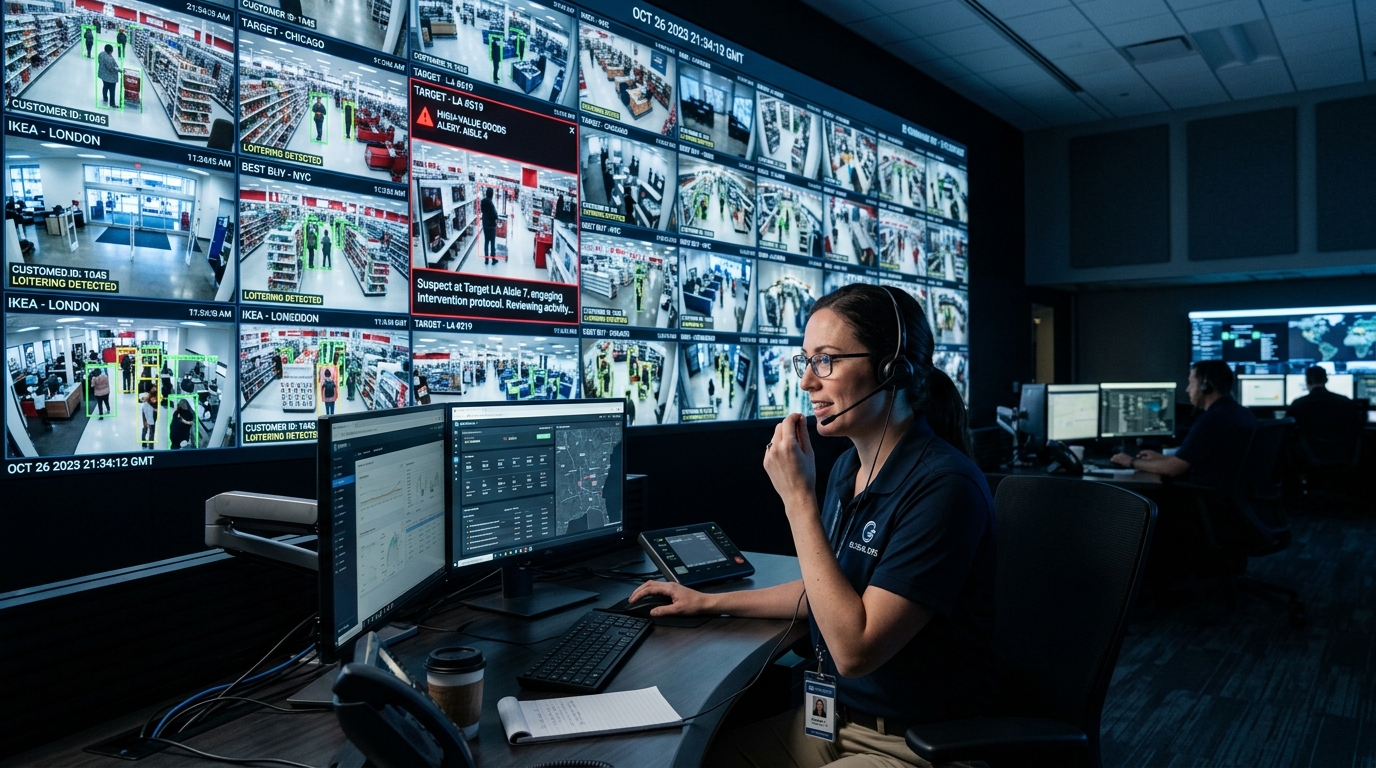
When an AI system flags a potential threat—like organized retail criminals sweeping high-value items—an alert is instantly sent to our dedicated, 24/7 global monitoring team. Using integrated two-way speakers, our human operators can perform real-time "voice-downs," directly addressing the individuals on-site and telling them to move along before they exit the store.
4. Local-First Storage: Ending the "Cloud Tax"
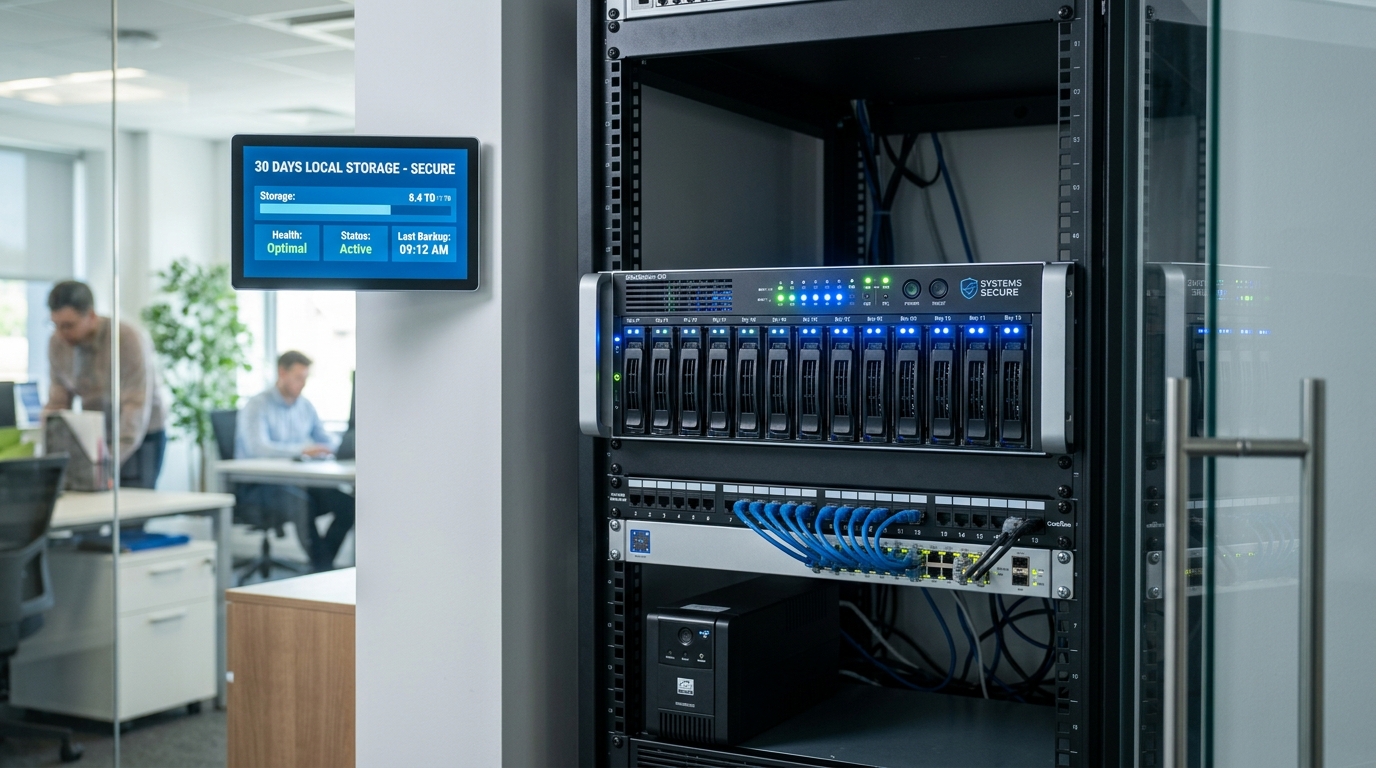
Many modern camera systems lure businesses in with low hardware costs, only to trap them in massive monthly cloud storage fees. AI Surveillance utilizes a Local-First Storage approach. The system stores high-definition video locally on-site, providing you with 30 days of footage to meet legal standards—without the exorbitant monthly cloud fees eating into your profit margins.
The Takeaway: You cannot manage what you cannot see. By combining intelligent computer vision, direct POS integration, and 24/7 human verification, AI Surveillance transforms your security system from a reactive recording device into a proactive profit-protection engine.
Questions & Answers (Q&A)
Q: Why are self-checkout theft rates so high?
A: Self-checkout machines lack the social friction of a human cashier. Customers often exploit blind spots, use cheaper item codes, or purposely fail to scan items because they feel they won't be caught. The lack of real-time monitoring turns these kiosks into easy targets for both opportunistic shoppers and organized retail crime.
Q: How does aisurveillance.ae stop the "Banana Trick"?
A: Our system uses overhead AI computer vision cameras synced with the self-checkout register. It compares the visual profile of the physical item placed on the scale or bagging area with the digital barcode rung up on the screen. If the items do not match, the system alerts the store host immediately.
Q: Can AI surveillance help with traditional cashier lanes too?
A: Absolutely. The same POS integration that protects self-checkouts also monitors staffed registers. It automatically audits high-risk behavior like excessive voids, unauthorized discounts, and "sweethearting" (where cashiers give away free inventory to friends), attaching video clips to every suspicious transaction.
Q: Do I have to pay expensive monthly cloud storage fees?
A: No. Unlike many modern security startups that charge a massive "Cloud Tax" for off-site video storage, AI Surveillance uses a local-first storage model. You get secure, high-definition footage stored right on your premises, drastically lowering your long-term operating costs.